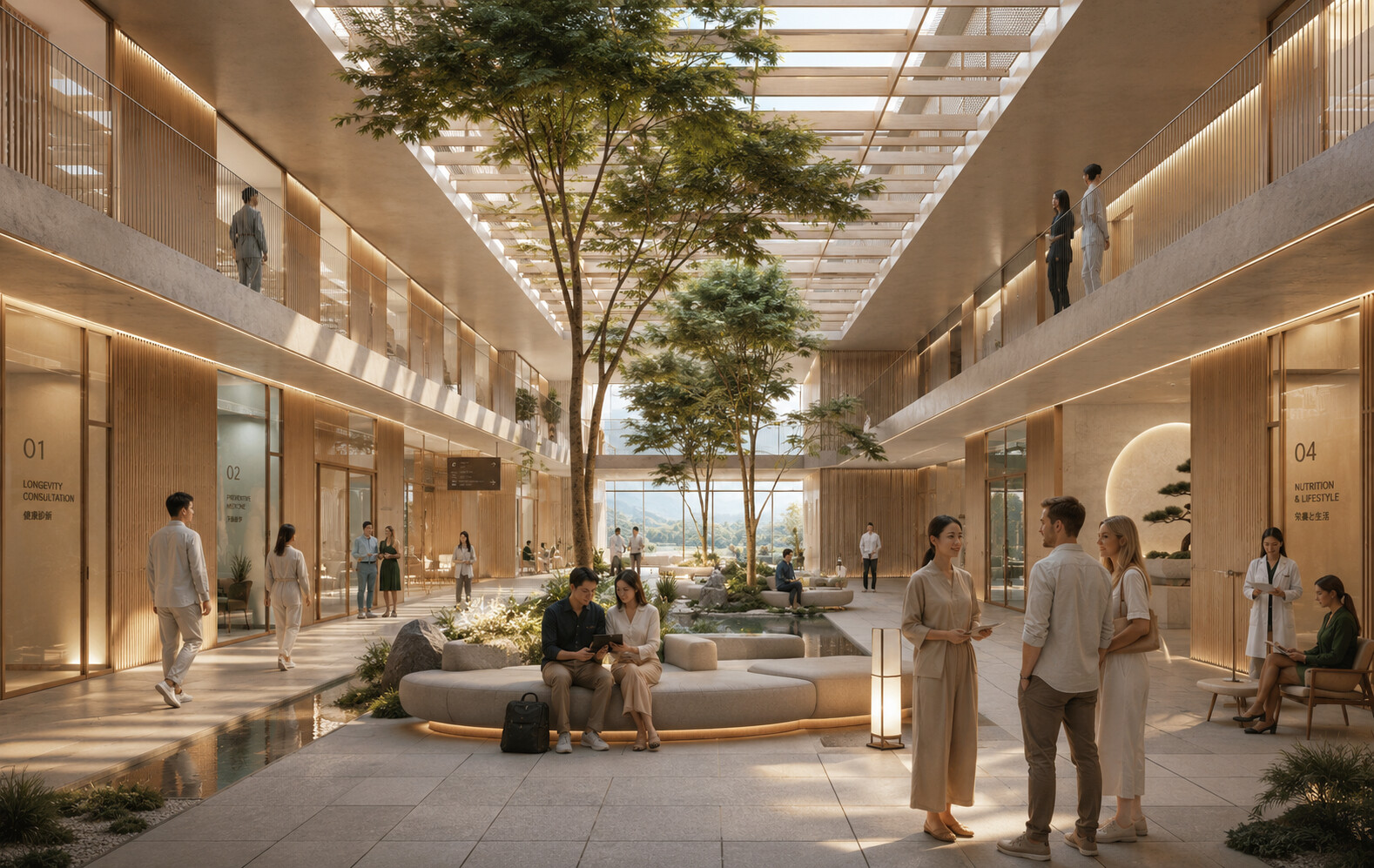
If it looks simple, you probably did it right.
Hospitals that are easy to understand, build and operate embody deep expertise. Their clarity is the product of experience, iteration and disciplined coordination. The design team resolves complexity before it reaches patients, staff and operators.
01The lowest construction cost can become the most expensive hospital.
Capital budgets often reward an immediate saving while operating budgets absorb the consequences for decades. Staffing, energy, maintenance, replacement, cleaning and logistics belong in every design decision from the beginning.
02Standardization drives consistency while preserving context.
The purpose of a repeatable hospital system is to preserve proven clinical relationships, interfaces and performance criteria. Local care models, climate, regulation, workforce and supply chains still determine the configuration. Repetition reduces rework; adaptation adds resilience.
03A sustainable hospital is an operational strategy.
Sustainability begins with demand reduction, passive measures, maintainable systems, water and energy resilience, local capability and an operating model that sustains performance over time.
04