The Sustainable Hospital

A repeatable hospital system — intelligently adapted.

Standardisation creates speed and certainty only when it is paired with intelligent local adaptation. Pansanté connects clinical logic, engineering, construction and operations in one coordinated framework.

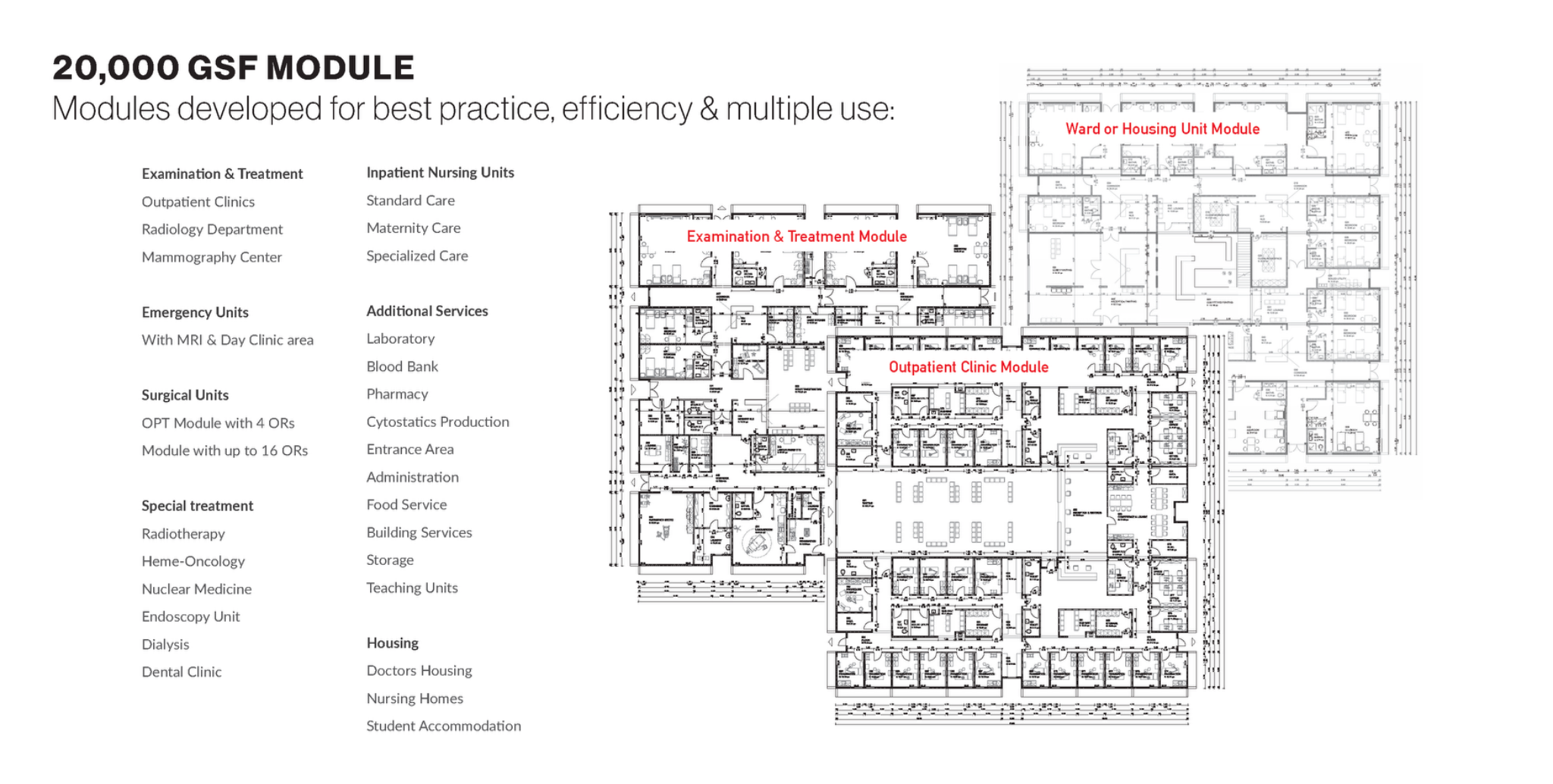
Pansanté modular hospital system study

System study · repeatable modules, connected clinical functions and clear expansion logic

The principle

Standardise the intelligence. Adapt the outcome.

A hospital system preserves proven decisions, interfaces and performance criteria while allowing each building to respond to its specific context.

Repeat where it reduces risk

Clinical adjacencies, room families, structural logic, technical interfaces, documentation and quality criteria.

Adapt where context determines performance

Care model, capacity, regulation, climate, site, culture, workforce, materials, supply chain and financing.

Early Sustainable Hospital study by Gunnar Dennewill showing independent modules connected by shared circulation
Independent clustersEarly Sustainable Hospital concept study
Early Sustainable Hospital modular plan study by Gunnar Dennewill
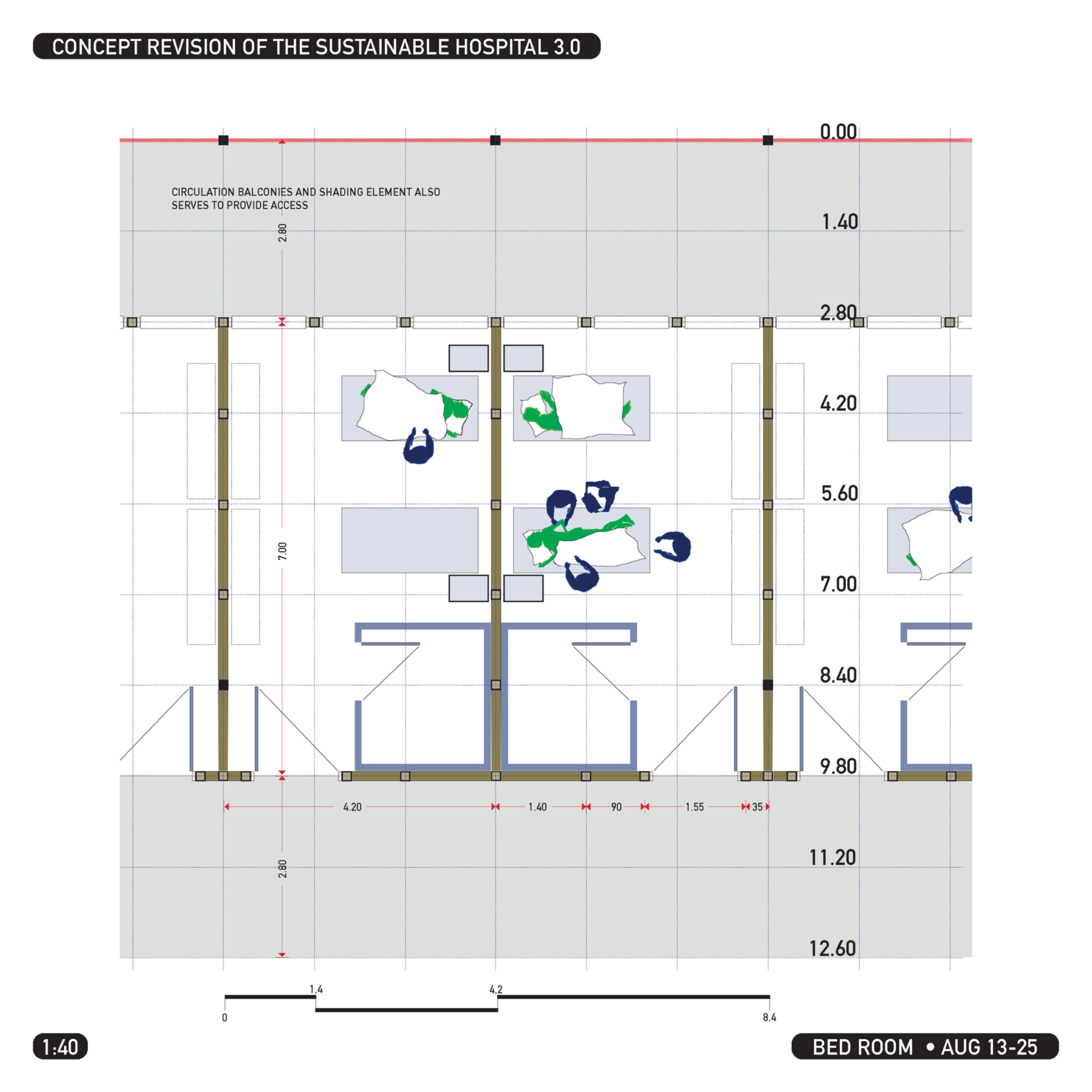
Repeatable planning logicEarly Sustainable Hospital planning study

Origins & recognition

Developed through real healthcare dialogue.

Early versions of the system were developed around a request for three 250-bed hospitals in Senegal.

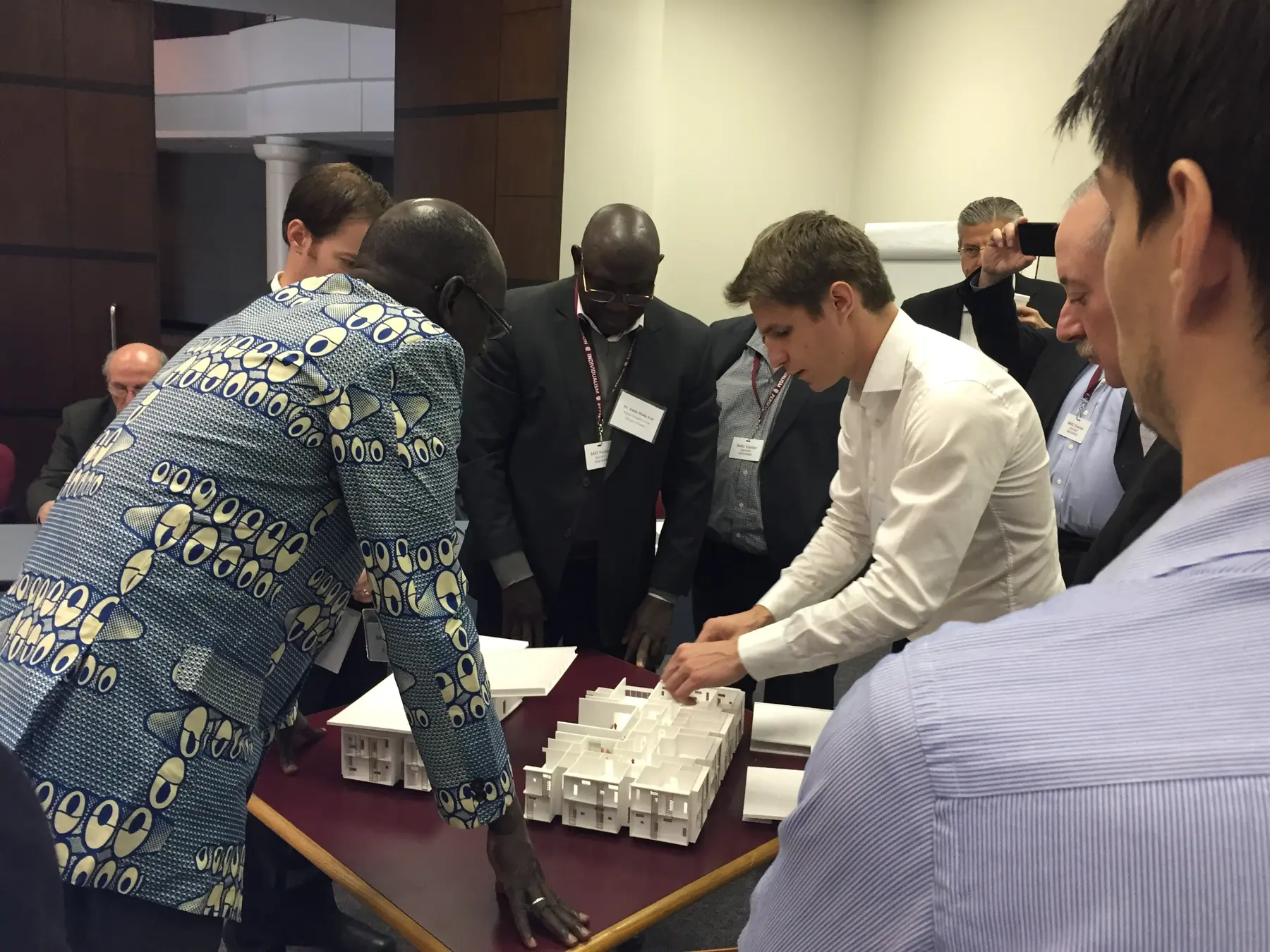
This workshop in Fairfax, Virginia, brought the planning team together with representatives of the Government of Senegal to examine the model, clinical organisation and repeatable construction logic. The hospital concept received three AIA awards.

Development workshop with representatives of the Government of Senegal examining the modular hospital model in Fairfax, Virginia
Senegal hospital concept development workshopFairfax, Virginia · model of the three-time AIA award-winning concept

Six connected layers

Performance is designed across the full system.

Each layer changes the others. Pansanté keeps the consequences visible and the decisions coordinated.

01

Care model & clinical performance

The system begins with health need. Capacity, acuity, referral pathways, diagnostics, treatment, inpatient care and ambulatory services define the clinical model. Patient, staff, material, waste and emergency flows are tested before form is fixed.

  • Capacity
  • Flows
  • Zoning
  • Infection control
02

Reference design & local adaptation

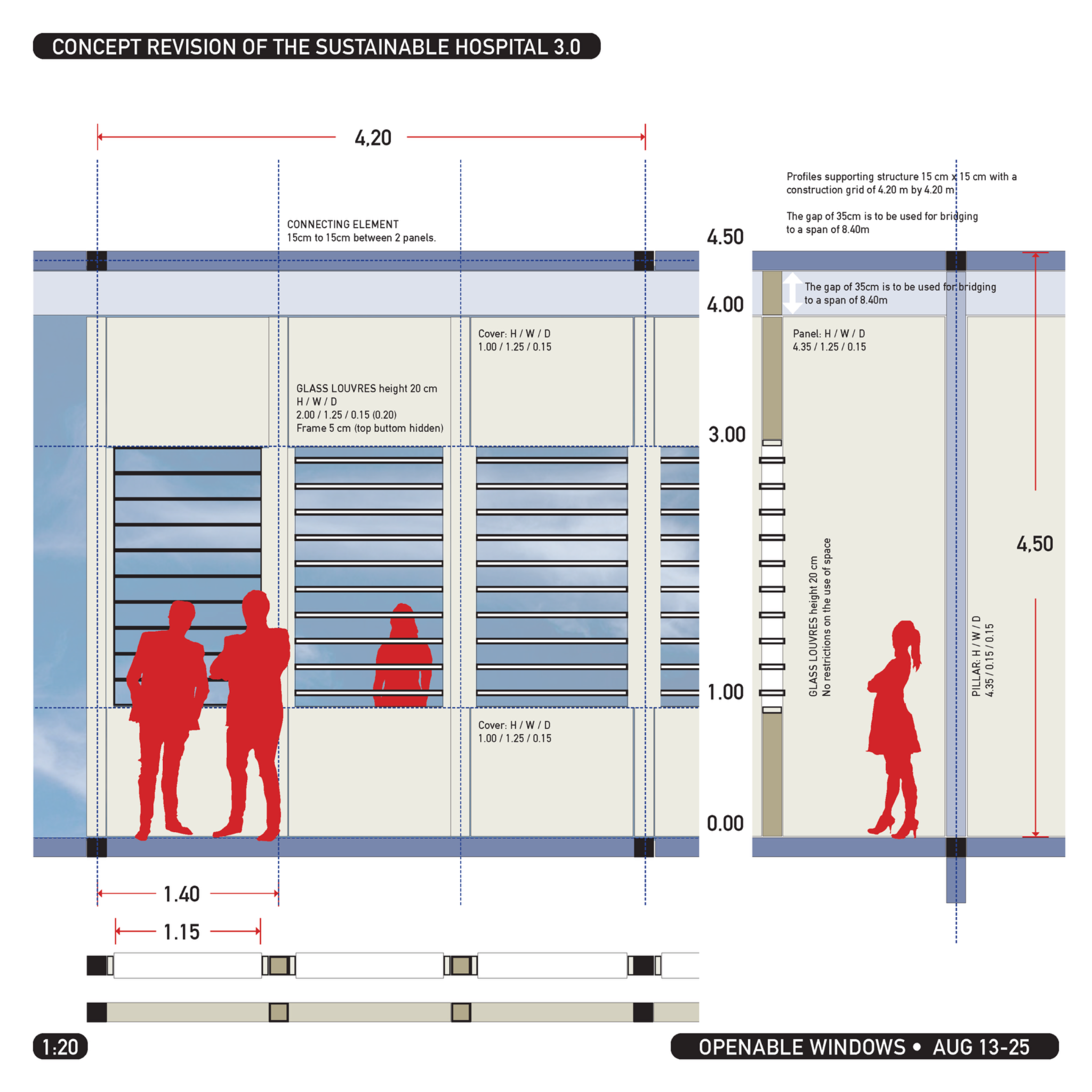
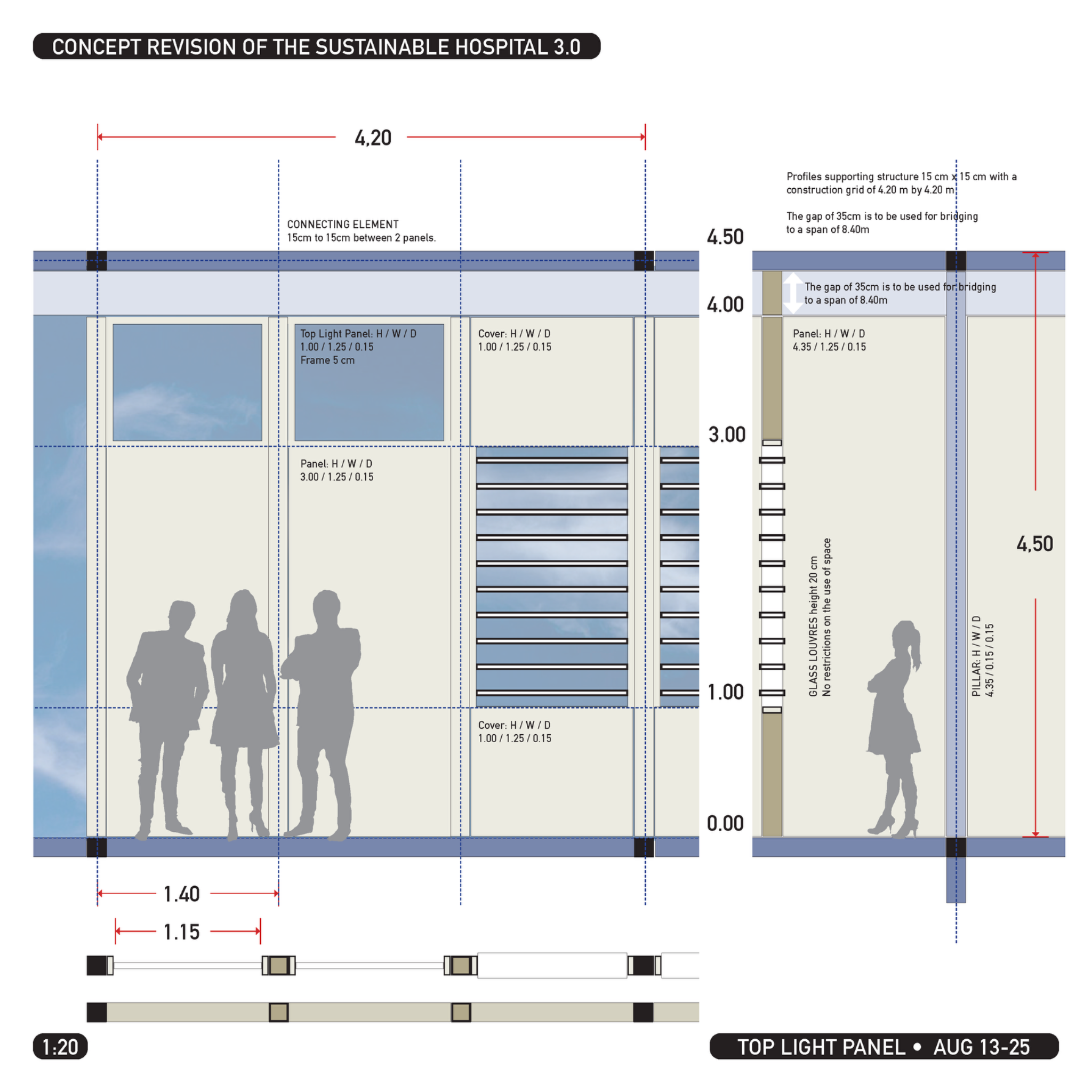
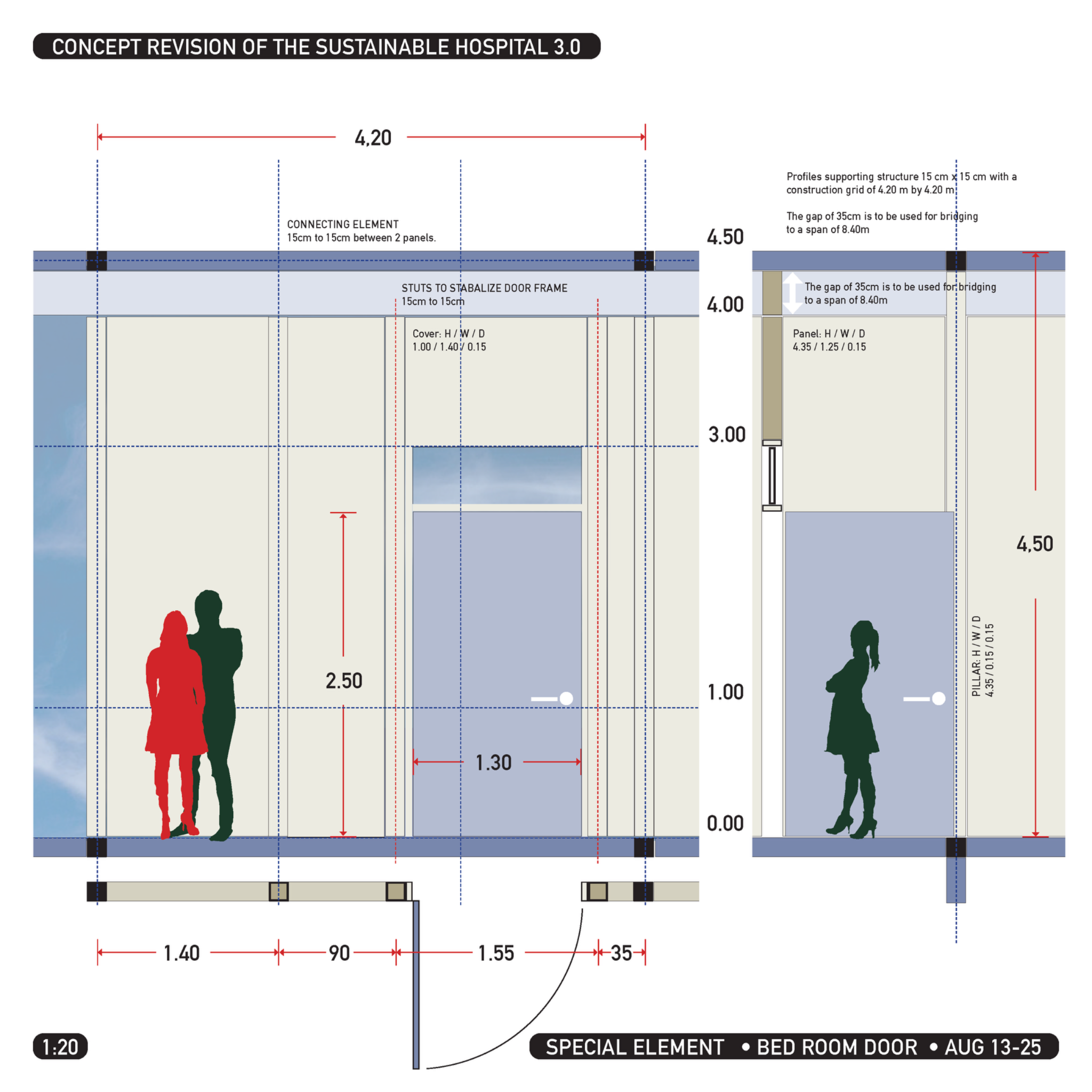
Repeatable planning grids, room families and technical interfaces create a stable chassis. The programme, site, climate, code, construction market, culture and staffing model determine its configuration. Disciplined adaptation combines proven intelligence with a locally specific response.

  • Room families
  • Interfaces
  • Phasing
  • Compliance
03

Climate, resources & resilience

Architecture and environmental engineering are developed together. Passive measures reduce demand before mechanical systems are sized. Energy, water, waste, daylight, thermal comfort, air quality, infection risk and backup strategies respond to local conditions and operational capability.

  • Passive design
  • Energy
  • Water
  • Redundancy
04

Construction & supply chain

The construction logic is designed around what can be procured, produced, transported, assembled and maintained in the project region. Standardised components and coordinated interfaces can shorten delivery, while local sourcing and fabrication are evaluated where they improve resilience and economic value.

  • Buildability
  • Procurement
  • Local value
  • Quality
05

Operations & lifecycle affordability

Low capital cost can create decades of avoidable operating expenditure. Pansanté tests CapEx and OpEx together: staffing, maintenance, replacement cycles, consumables, energy, water, cleaning, logistics and future change. Sustainable Return on Investment makes wider financial, social and environmental value visible.

  • CapEx / OpEx
  • Maintainability
  • SROI
  • Adaptability
06

Governance, commissioning & learning

Clear decision gates, responsibilities, information requirements and quality controls keep the concept intact through procurement and construction. Commissioning prepares systems and teams for operation. Post-occupancy learning then improves the next application of the system.

  • Decision gates
  • BIM / data
  • Commissioning
  • Feedback

Performance objectives

Greater independence where context demands it.

The Sustainable Hospital was conceived for demanding contexts with variable climate, infrastructure, supply chains and operating resources. Each performance objective is tested and calibrated for the specific programme and location.

01

Operational autonomy

On-site energy, water and waste strategies can reduce dependence on fragile infrastructure. The appropriate degree of autonomy is defined for each programme and location.

02

Climate adaptation

The same planning intelligence responds differently to hot-arid, warm-humid, temperate or cold conditions. The climate concept guides the mechanical systems.

03

Local value creation

Local materials, fabrication, employment and training are evaluated wherever they improve delivery resilience, maintainability and regional economic value.

04

Continuity & growth

Independent functional clusters, clear interfaces and phased expansion allow parts of the hospital to change while the whole remains operational.

Integrated specialist depth

The system is only as strong as its interfaces.

Pansanté defines the shared performance brief and coordinates the consequences across disciplines. Specialist organisations are engaged according to the programme, location and delivery stage; participation is confirmed project by project.

01

Healthcare architecture

Clinical adjacencies, human experience, clear orientation and a building form that actively supports care.

02

Climate engineering

Passive measures, comfort, air movement and demand reduction developed with the architecture from the first section and orientation studies.

03

Healthcare engineering

Robust, maintainable building services aligned with infection control, clinical risk, redundancy and the capabilities of the operating team.

04

Quality assurance

Reviews, decision gates and field verification are embedded continuously from briefing through commissioning.

05

Equipment & processes

Medical equipment, room requirements, workflows, procurement and replacement strategies coordinated as one operational system.

06

Structure & materials

Efficient grids, replaceable components and material choices assessed for local availability, production, transport, carbon and future recovery.

07

Landscape & microclimate

Shade, planting, courtyards and outdoor circulation support recovery, orientation, biodiversity and a more comfortable local microclimate.

08

Water & waste

Demand reduction, rainwater, treatment, reuse and waste pathways calibrated to local resources, regulation and operational capacity.

09

Lifecycle economics

Capital, operating, social and environmental consequences evaluated together to make the long-term value of better decisions visible.

10

Fire & life safety

Compartmentation, evacuation, smoke control and continuity strategies developed for complex care environments and non-ambulant patients.

11

Supply chain

Components, logistics, local fabrication, spares and replacement routes considered early enough to influence the design.

12

Operational readiness

Commissioning, training, maintenance information and transition planning connect a completed building with safe, functioning care.
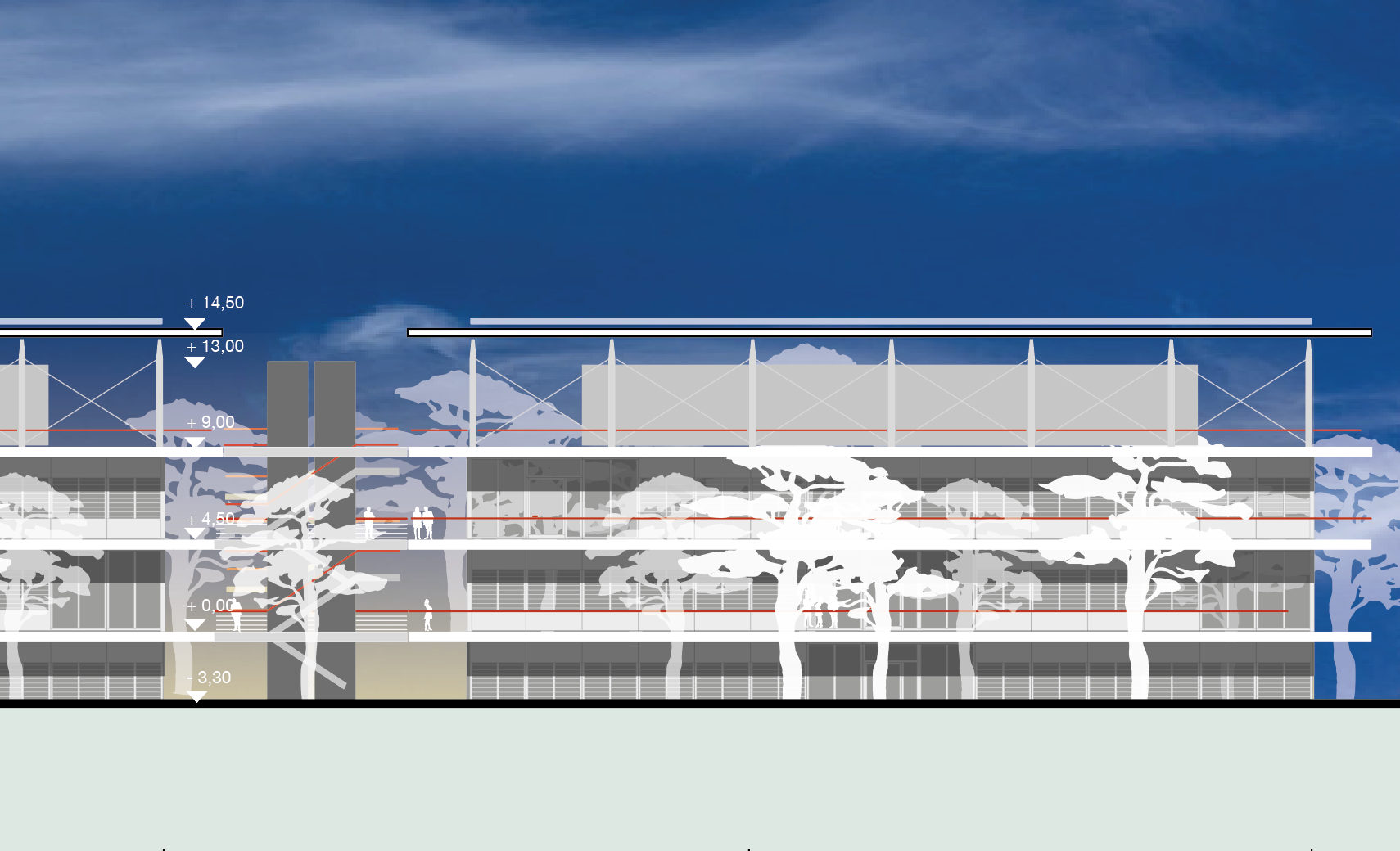
Pansanté hospital elevation study showing coordinated building and roof levels
Climate-responsive building sectionElevation and level study · Pansanté
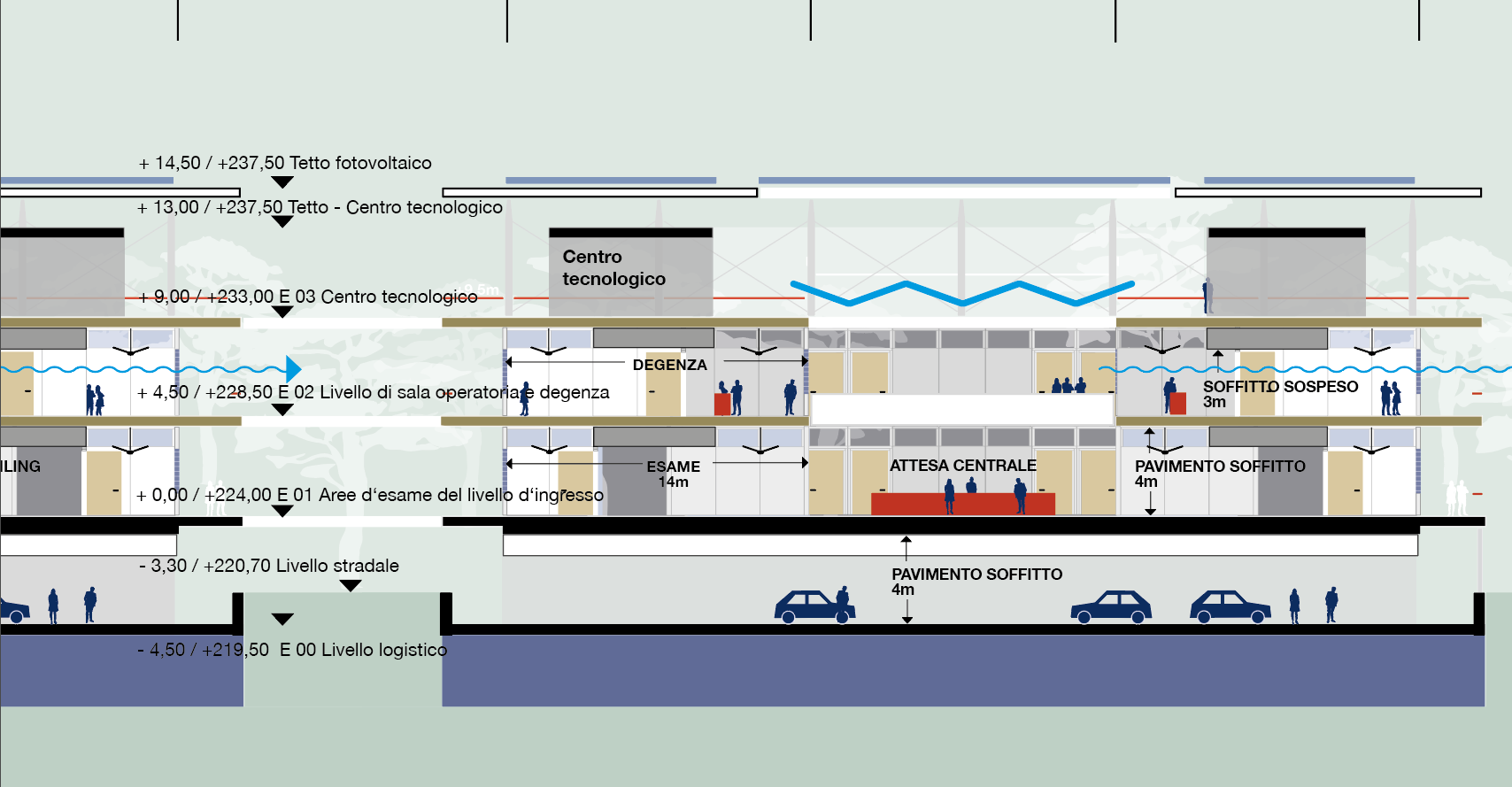
Pansanté hospital section showing aligned clinical, technical and logistics levels
Architecture, climate & servicesIntegrated level study · Pansanté

The Pansanté proposition

A physical, adaptable healthcare system grounded in operational reality.

Healthcare infrastructure is physical, regulated and operationally demanding. It needs experienced judgement. Pansanté uses digital tools, industrialised methods and repeatable data where they add value — while keeping the care model, local capability and long-term operation at the centre.

See how we work